


As deepfakes, synthetic intelligence-generated simulations of actual folks, turn out to be extra refined, the power to differentiate between actual and pretend on-line turns into more and more difficult. This rising risk to on-line safety and belief prompted Ethereum co-founder Vitalik Buterin to suggest a novel protection mechanism: personalised safety points.
Explaining the vulnerability of conventional safety measures akin to passwords and common safety inquiries to the evolving deepfakes, Buterin emphasised that his proposal depends on one thing that synthetic intelligence has but to totally grasp—the richness of human connections.
Ethereum co-founder’s genius hacker outsmarts deepfakes
Moderately than counting on simply guessed info like a pet’s identify or a mom’s maiden identify, Buterin’s system makes use of questions primarily based on shared experiences and distinctive particulars particular to the interacting people. Think about recalling a joke from faculty, or that obscure nickname your grandma gave you as a toddler—these private particulars create a form of reminiscence maze that challenges the impostor making an attempt to mimic somebody.
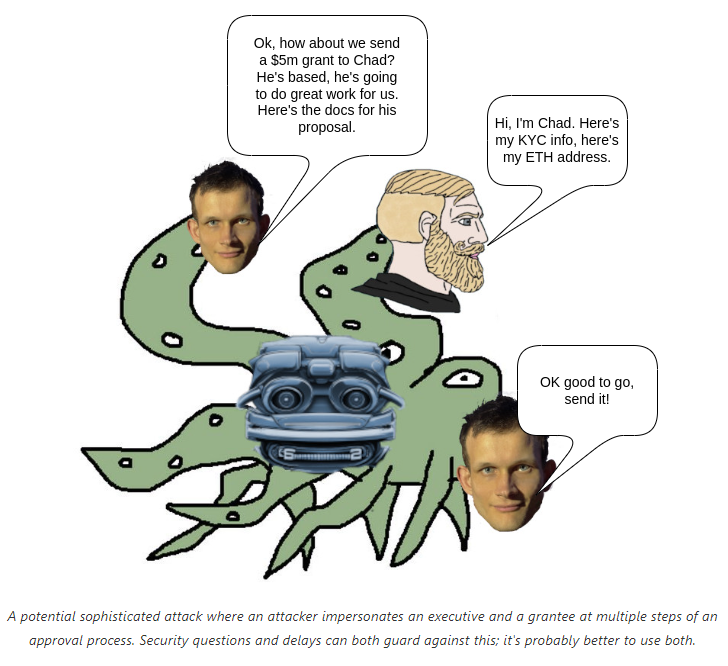
Supply: vitalik.eth.limo
Nonetheless, remembering particulars from the previous is not at all times straightforward. Buterin acknowledged the potential of reminiscence points however seen them as one other layer of protection. The very act of recalling these obscure particulars provides complexity, additional deterring imposters who haven’t got entry to such private info.
Ethereum presently buying and selling at $2,508.7 on the each day chart: TradingView.com
Buterin acknowledges the necessity for a multi-pronged strategy and does not cease at personalization. He envisions a layered safety system with parts akin to pre-agreed codewords, refined coercion alerts, and even affirmation delays for essential Ethereum transactions. Consider every layer as a barrier that makes it exponentially harder for an attacker to achieve entry.
Deepfake risk prompts pressing answer inquiries
The proposal comes at a essential time. A latest report uncovered one other deepfake try focusing on Buterin, highlighting the pressing want for efficient options. Whereas consultants reward the ingenuity and potential of his strategy, questions stay.
We have seen deepfakes @VitalikButerin Used to advertise pockets drainers
The rip-off web site is strnetclaim[.]copy
Screenshots of the video are as follows pic.twitter.com/R8AY5CVOea
— CertiK Alert (@CertiKAlert) February 7, 2024
Challenges akin to safe storage of those personalizations come up once more when contemplating implementation. Can they be securely encrypted and accessed with out changing into susceptible targets? Scalability additionally raises considerations. Whereas this strategy works in close-knit teams or people with deep shared experiences, how does it work in a broader context or in on-line interactions with strangers?
Moreover, points relating to accessibility have arisen. May over-reliance on reminiscence or particular shared experiences create obstacles for sure demographics or people who might not have the identical degree of element? Lastly, as synthetic intelligence continues to evolve, future-proofing turns into essential. Will refined synthetic intelligence finally study to control or entry these recollections, thereby invalidating the issue?
Solely time will inform if Ethereum boss Buterin’s reminiscence maze can outsmart deepfakes, however one factor is for certain: this intelligent proposal sparks an vital dialog about defending our digital selves. In a world the place even actuality itself is underneath assault, exploiting the intricacies of human reminiscence could be the subsequent frontier within the struggle towards refined on-line impersonation.
Featured picture from Adobe Inventory, chart from TradingView
