


Over the previous decade, the abbreviations AML and KYC have develop into an integral a part of our lives. To assist legislation enforcement observe illicit funds, an more and more stringent set of anti-money laundering measures is being applied globally. Over the previous twenty years, monetary establishments have been topic to in depth “know your buyer” obligations, forcing them to look at their prospects’ identities, backgrounds and the character of their actions. This method based mostly on surveillance and the presumption of guilt helps the worldwide monetary system successfully fight criminals by reducing off the circulation of funds.
Or is there actually one?
Actual-life numbers inform a distinct story. A number of unbiased research have discovered that AML and KYC insurance policies allow authorities to recuperate lower than 0.1% of felony funds. Anti-money laundering efforts price 100 instances these quantities, however extra importantly, they start to threaten our basic proper to privateness.
Examples of ridiculous calls for, equivalent to a French man being requested to show the origin of the 0.66 euros he wished to deposit, not entice anybody’s consideration. Regulators face this ridicule with out batting a watch, whereas reporters and whistleblowers proceed to show billions of {dollars} laundered on the highest ranges of the identical establishments that put their outdated purchasers via a bureaucratic nightmare.
This implies that sacrificing our proper to privateness might not be justified by the implications.
The emergence of blockchain as a free worth switch system, not like KYC-gated fiat currencies, offers hope to many particular person freedom advocates. Nonetheless, regulators have responded by making an attempt to combine the acquisition and switch of cryptocurrencies into present anti-money laundering processes.
Does this imply that blockchain has been tamed, with entry and exit blocked by anti-money laundering laws?
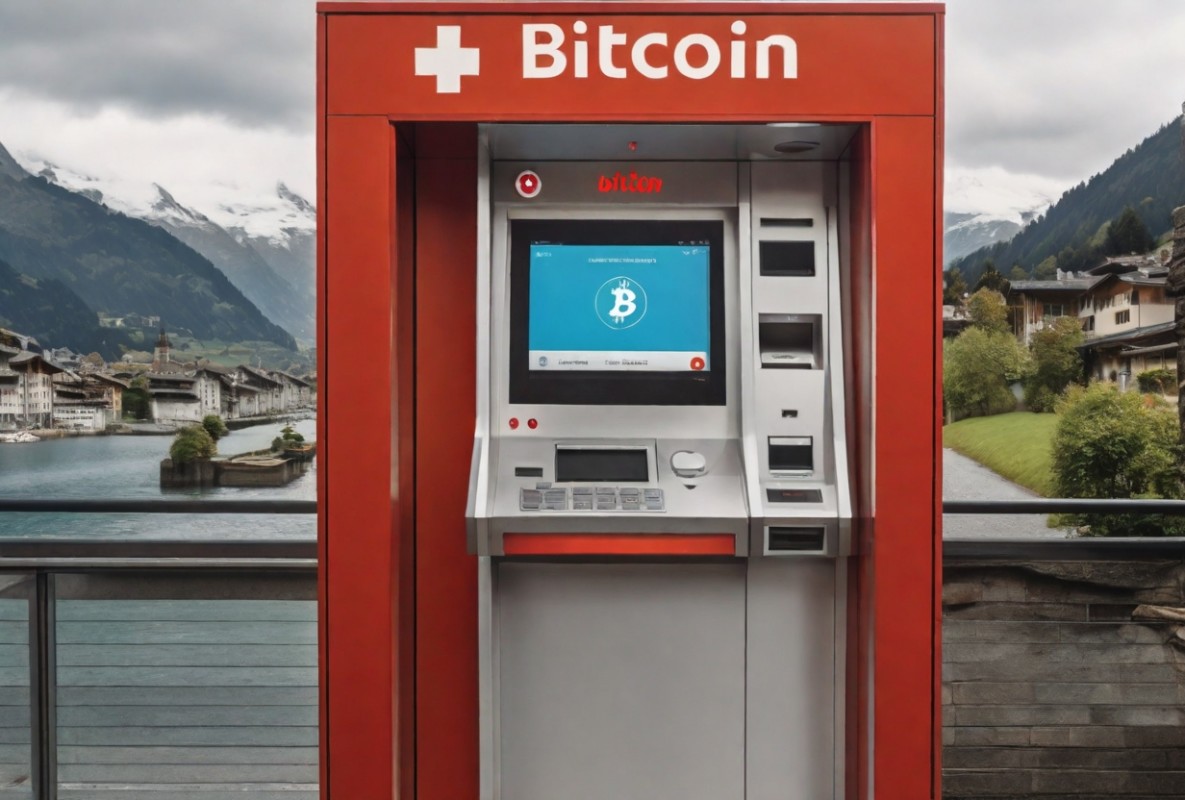
Thankfully, not but. Or not less than not in each jurisdiction. For instance, Switzerland, identified for its sensible widespread sense, usually permits firms to outline their very own threat exposures. Because of this individuals can buy cheap quantities of cryptocurrency with out KYC.
Switzerland’s instance could possibly be useful in stopping world anti-money laundering practices from spiraling uncontrolled and giving the world a surveillance state that was as soon as referred to as “free.” It’s value taking a better look, however first, let’s take a look at why conventional anti-money laundering strategies fail.
KYC: Worst coverage ever
Few dare query the effectiveness of present AML-KYC insurance policies: nobody needs to be on the “felony” aspect of the talk. Nonetheless, this debate is value having as a result of our society appears to spend an unseemly sum of money and vitality on issues that do not have the specified impact.
As Europol Director Rob Wainwright identified in 2018: “Banks spend $20 billion a yr working compliance programs… We seize 1% of felony property in Europe yearly.”
The concept was proposed in one of the vital complete research on the effectiveness of AML, printed in 2020 by Ronald Pol of La Trobe College in Melbourne. The report discovered that “anti-money laundering coverage intervention impacts lower than 0.1% of felony funds, compliance prices exceed recovered felony funds by greater than 100 instances, and banks, taxpayers and extraordinary residents are punished extra severely than felony enterprises.” As well as, , “Accusing banks of not ‘correctly’ imposing anti-money laundering legal guidelines is only a handy fiction. As an alternative, the underlying drawback could lie within the design of the core coverage prescriptions themselves.”
The research used a variety of knowledge from main international locations and establishments, however the authors acknowledged that it might be practically unimaginable to reconcile all of them. Certainly, as unusual as it could appear, regardless of the billions of {dollars} and euros spent on anti-money laundering, there are not any common practices that will enable us to measure its effectiveness.
Nonetheless, the truth is tough to disregard. Although trendy KYC practices are 20 years outdated, organized crime and drug use proceed to rise. What’s extra, high-profile investigations have revealed large money-laundering schemes on the highest ranges of revered monetary establishments. Credit score Suisse aided Bulgarian drug traffickers, Wells Fargo (Wachovia) laundered cash for Mexican cartels, BNP Paribas facilitated the operations of Gabonese dictators… to not point out tax fraud initiated by the banks themselves: Danske Financial institution, Deutsche Financial institution , HSBC and plenty of others have been discovered responsible of defrauding their international locations. Nonetheless, regulators have responded by tightening guidelines round small retail scale transfers and creating in depth purple tape for extraordinary law-abiding residents.
Why would they select such cumbersome and inefficient measures? Maybe the principle cause right here is that the group that defines the foundations isn’t accountable for imposing the foundations or the top consequence. This lack of accountability could clarify why more and more ridiculous guidelines pressure monetary establishments to take care of armies of compliance specialists whereas extraordinary individuals leap via hoops to carry out primary monetary operations.
This actuality isn’t solely miserable; Set inside the broader historic and political context, it reveals worrying developments. More and more intrusive laws create a framework that successfully filters individuals out. Because of this completely different teams might be reduce off from the monetary system below the pretext of combating terrorism. This consists of politically uncovered individuals, dissidents, the homeless, non-conformists… or these concerned within the cryptocurrency house.
Cryptocurrency Anti-Cash Laundering
As a consequence of its decentralized nature, blockchain represents a major problem for fiat programs. In contrast to centralized banks which might be burdened with numerous anti-money laundering-related verification burdens, blockchain nodes solely run code that’s irrelevant to the consumer.
Blockchains like Bitcoin can’t be molded into an anti-money laundering mannequin, however intermediaries, also referred to as VASPs (Digital Asset Service Suppliers), can. Their anti-money laundering obligations now embody two broad classes: shopping for cryptocurrencies and transferring cryptocurrencies.
Transferring cryptocurrencies falls below the prerogative of the FATF, and most international locations are inclined to implement the group’s suggestions ultimately. The suggestions embody “journey guidelines”, that means knowledge about funds should “journey” with them. At the moment, the FATF recommends that any fiat switch over $1,000 should embody sender and recipient data.
Completely different international locations have completely different journey thresholds, starting from $3,000 in the US to €1,000 in Germany and €0 in France and Switzerland. The upcoming TFR regulatory replace will make KYC obligatory for each cryptocurrency switch ranging from €0 throughout all EU international locations.
Nonetheless, the advantage of blockchain is that it doesn’t require intermediaries to switch worth. Nonetheless, it requires them to buy cryptocurrencies with fiat foreign money.
The framework for buying cryptocurrencies is set by monetary regulators and central banks, and that is the place international locations have historically performed an essential function. In France, a extremely centralized nation, market practices are outlined in nice element via a collection of bylaws, on-site inspections and conferences. Switzerland is a decentralized nation identified for its consensus-based direct democracy, which generally grants monetary intermediaries a sure diploma of autonomy in managing their very own threat urge for food.
Switzerland can also be the nation the place Friedrich Hayek, one of the vital well-known liberal economists, based the well-known Mont Pilgrimage Society. Whilst early as 1947, members apprehensive about threats to particular person liberty, noting that “even Western man’s most useful possessions, specifically, freedom of thought and speech, are threatened by the unfold of creeds that declare the privilege of tolerance in society. A minority place that seeks solely to ascertain a place of energy from which they’ll silence and obliterate all views besides their very own.”
Curiously, an organization referred to as Mt Pelerin, a cryptocurrency dealer, is now working on the shores of Lake Geneva.
Purchase cryptocurrencies in Switzerland
Switzerland is much from the liberal tax haven many consider it to be. It bowed to worldwide strain and successfully ended a centuries-old custom of banking secrecy for overseas residents. It’s now a member of the Group for Financial Co-operation and Growth’s (OECD) Treaty on Computerized Trade of Data, and its enthusiasm for implementing the suggestions of the Monetary Motion Activity Drive (FATF) suggests it’s keen to shed its earlier sulfur picture. In actual fact, FINMA determined again in 2017 to implement cryptocurrency journey guidelines beginning at €0, together with non-custodial wallets. In distinction, the “conservative” EU will solely implement this obligation in 2024.
Nonetheless, Switzerland nonetheless prefers to not micromanage monetary establishments and impose reams of paperwork on day-to-day operations when cash doesn’t explicitly depart the nation. It’s now one of many few international locations within the Previous World the place individuals should purchase cryptocurrencies with out being analyzed. Because of this an organization like Mt Pelerin can course of retail-scale crypto transactions of CHF 1,000 per day with out prospects having to confirm their identification.
This does not imply open bars, nevertheless it means the next diploma of autonomy. For instance, Mt Pelerin implements its personal fraud detection strategies and reserves the correct to refuse suspicious transactions. In comparison with the cumbersome bureaucratic procedures applied in different international locations, this strategy really has a excessive success fee in filtering fraudulent transaction makes an attempt. In any case, firms working on the entrance strains usually perceive evolving fraud ways higher than authorities officers.
For the advantage of our society, Switzerland’s strategy to anti-money laundering have to be preserved and replicated. In an age the place mass surveillance has develop into the norm and the event of CBDCs threatens to impose full management over our private funds, we’re nearer than ever to the dystopia that Friedrich Hayek feared.
By controlling our every day transactions, any authorities, even a well-intentioned one, can manipulate our lives and successfully “obliterate any perspective besides their very own.” For this reason we purchase Bitcoin and why we need to purchase Bitcoin with out KYC.
What about criminals, you would possibly ask? Shouldn’t we reduce off their entry to capital to curb their curiosity in underground entrepreneurship?
Admittedly, after 20 years of recent anti-money laundering analysis, this argument has been confirmed improper. So why not settle for that criminals are coming into our cash flows and tracing these funds to show their actions? Proceed studying Half 2 to be taught extra.
Particular because of Biba Homsy, regulatory and cryptocurrency lawyer at Homsy Authorized, and the Mt Pelerin workforce for sharing their insights.
It is a visitor put up Marie Potrieva. The views expressed are fully their very own and don’t essentially mirror the views of BTC Inc or Bitcoin Journal.
